HowTheMarketWorks is an awesome free stock game, built specifically for schools. Between our easy set-up of custom contests, Assignments and lessons, and live-streaming rankings, why are so many teachers upgrading their class to PersonalFinanceLab?
Reason 1: Huge Curriculum Expansion
HowTheMarketWork’s Assignments tool lets teachers add in a few basic Personal Finance and Economics lessons from our Education Center, which end with a pop quiz. Students need to get all the questions right to get credit, which is a basic way to see students are completing their assigned work.
But on PersonalFinanceLab, this is supercharged to a whole new level:
Over 300, standards-aligned lessons for Personal Finance, Economics, Business, and Investing classes (see how we align to standards)
Student progress is tracked in real-time, including grades on every quiz
Fully exportable progress and grade reports for every class
Queue up assignments for students to start as soon as they finish one section (see how it works)
…And teachers can even give bonuses to student’s portfolios when the complete their assignments on time!
Our library is fully online, perfect for distance/blended learning, or even homework!
Reason 2: Awesome New Budgeting Game!
The stock market and investments is usually a small part of any Personal Finance class, which is why PFinLab’s new Budgeting Game is the most important new anchor for your class!
Our fully-customizable budgeting game starts your class off as college students with a part-time job, or fresh graduates just starting their full time job (you can even combine the two and capture the real-world transition, right in the game!). Students need to continually set and achieve savings goals, build up their Emergency Funds, manage their credit card to build their Credit Score, all while maintaining a high Quality of Life!
PersonalFinanceLab’s stock game has everything you know and love about HTMW, but so much more! Further customize your class with:
Over 30 international exchanges
Bonds, Options, and Commodity trading
Built-in research tools, right on the trading page
Fully exportable reports, for both students and teachers
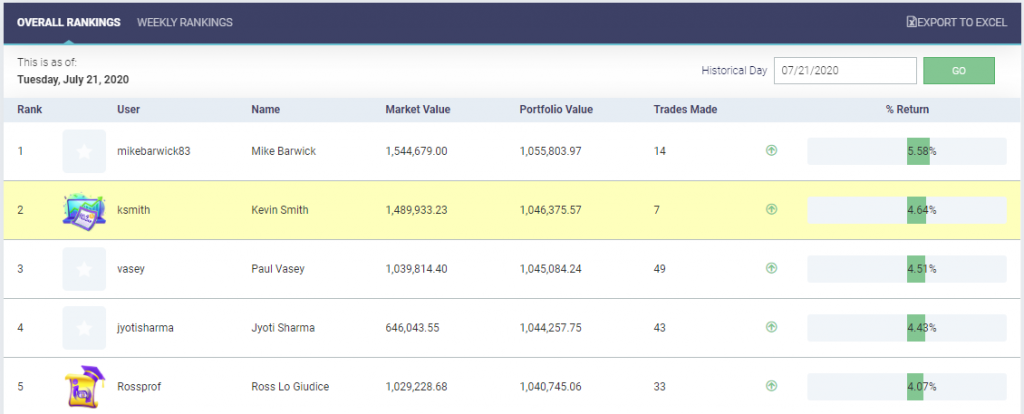
New types of rankings, adjusted for risk and broken down by week
More built-in charts and comparison tools
…and a fully-gamified learning experience, as students earn badges while progressing through the stock game, budget game, and curriculum (click here to learn more)!
Reason 4: Dozens of Customizable Teacher Reports
Because HTMW is an open site to the public, there are limited reports that appeal to everyone. However, on PersonalFinanceLab, there are dozens of new and exciting reports for your class’s stock game, budget game, and assignments!
You can easily track:
Every student’s trades and trading notes, fully exportable for a single student or your entire class
Post announcements and messages to your class, including images and videos
Awesome Diversification reports, showing student breakdowns by asset type (stocks, mutual funds, cash, ect) and Industry of the stocks held
Historical reports, letting you wind back time and see your class status on any day of the competition
Activity reports showing how students interact with their portfolios over time
Registration file reports that let you change student usernames, reset passwords, and more
…and even your own custom reports, with our easy-to-use report builder to pull up just the information you need, when you need it!
Student data privacy is more important than ever. At HTMW, we actively take steps to minimize (or eliminate) the personal information collected from students, but some districts have very strict policies about ads, which we use to keep the lights on.
This is why it is more important that our PersonalFinanceLab site is completely ad-free, with several registration methods available to teachers based on the level of information students are allowed to enter into the system, with teachers fully in control.
PersonalFinanceLab starts at just $10 a student, with bulk discounts available for multiple classes. Registration is open now for the Fall, we’re looking forward to working with your classes soon!
Stock trading or investing in major stocks is a very tough task. People who are skilled at trading always focus on the technical and fundamentals aspects of trading. Some of the advanced traders often use the market sentiment to find potential trade setups. You can’t earn money by investing in random stocks. There are few rules that you need to follow or else it will be tough to survive as a stock trader. In this article, we will discuss five amazing rules that will help you to invest money in the stock market like a pro trader.
1. Invest in the major stocks
You must invest money in the major stocks. If you try to make money by investing in the penny stocks, it will be hard as the price movement of these assets is extremely unstable. Most of the time, the rookies jump into the penny stock as they think it will give them the perfect opportunity to earn a decent amount of money. But have a look at the experienced trader. You will never find that they are investing in penny stocks. They always trade a stable market as it improves their win rate.
2. Trade with the major trend
When you invest money in the stock market, you must understand the importance of the trend. Without understanding the importance of major trends, it will be really hard to overcome the obstacles and you will lose money most of the time. Investing money against the prevailing trend is more like pushing yourself in the line of fire. In technical terms, we call it reversal trading. Unless you have tons of experience in reversal trading, you should focus on the trend trading method.
3. Learn about the essential factors
You must learn about the essential factors to find the potential trade setup. Unless you can do the right thing at the right time, it will be very hard to become a good trader. Learn investing in stocks from scratch so that you don’t have to lose money just because of some silly mistakes. Instead of relying on the articles, hire a professional trader who truly knows the art of stock trading. Investing money in trading education is the best thing you can do as a trader. You might think everything is available in the online market for free but still, you will always get better stuff when you learn the key factors from the experts.
4. Time your trade properly
You must learn to time the trade properly. A few second delays in the investment business can result in thousands of dollars loss. The pro trader knows this fact very well and they always follow the conservative technique. People who think conservative technique is a waste of time has a lot to learn from this market. The conservative technique is nothing but using some filters and advanced market analysis so that the trades are taken at the perfect place. Without knowing the perfect way to buy or sell the stock, you can’t expect to change your life. So, learn time to trade the property so that you won’t have to regret the decision.
5. Trade with discipline
Investment business is not about big capital or depth of knowledge. Your success greatly depends on your discipline. If you break the rules and try to impose big lot trades just to earn a huge amount of money, you are making the novice mistake. You have to create a well-balanced trading routine and take the trade with proper discipline. Unless you trade with proper discipline, it will be hard to overcome the challenges and you will become frustrated. Spend some time to improve your mental agility and see the change in yourself. Once you start investing money on the major stocks with rational logic and discipline, you will feel more confident with this business.
Good risk management is an essential component of trading. Particularly so when you’re trading bitcoin, which can be highly volatile, and are using leverage. Given the potential to be forcibly liquidated when the market moves against you, it’s imperative that you take measures to hedge this risk. There are a few ways to achieve this, enabling you to enjoy the upside of the trade while minimizing the downside. Once you’ve learned how to short bitcoin with leverage, your next step should be to dial down the risk without dampening the potential profits. Here’s how.
Use Mutual Insurance
One way to reduce your risk profile when trading BTC is to take out mutual insurance. A number of derivatives exchanges offer this as a product, which is designed to provide short-term protection. Mutual insurance essentially protects you from short-term fluctuations that could otherwise liquidate your position. It’s basically a two-way hedge to be used in situations where you’re expecting volatility and don’t want it to blow up a longer-term position you have open. With mutual insurance, you pay a premium for obtaining cover, and will receive a payout in the event of it being triggered due to market conditions, reimbursing a portion of your losses.
Consider a Two-Way Hedge
If you’re long bitcoin but think it may be due to drop in the short-term, you can open a short position while maintaining your long. For example, you can buy bitcoin or borrow it on certain exchanges that provide margin trading and then use it to short while your long position remains open or vice-versa. If BTC goes up, part of the profits from your leveraged long can be used to cover the sum you’ll have to repay for borrowing BTC for your short.
Lower the Leverage
Crypto derivatives exchanges now routinely offer 100x leverage, and a handful offer even higher still. Cranking up the leverage in a bid to maximize your profits is a surefire way to get liquidated. Leverage of greater than 20x should be used by experienced traders only, and even then it carries significant risk. Start off with leverage of 5x or lower and only increase it once you’re confident you know what you’re doing – and can live with the consequences if you’re wrong.
Set Stops
Setting a stop loss is a smart way to minimize the downside when a trade doesn’t play out the way you’d anticipated. If things go awry, don’t let your liquidation price be hit: that’ll cost you more than manually closing out your position just before it’s auto-liquidated. Since it’s infeasible to monitor the market 24/7, setting stops is the smart thing to do.
Trading bitcoin derivatives is inherently risky if you don’t know what you’re doing. In electing to do so, you’re willing to take on that risk in the pursuit of greater rewards. Learning the available options for hedging that risk is a sign of maturity as a trader, and a smart way to ensure you don’t incur devastating losses when BTC violently wicks up or down. With a hedge in place, you’ll be able to sleep soundly in the knowledge that you’re protected whatever happens.
Keeping students engaged is more important than ever – which is the focus of the latest HTMW update!
This Fall, HTMW will feature new Rewards for assignments, Prerequisites to help with class pacing, and Badges to encourage students to above and beyond the class minimums!
Rewards: Instant Cash Bonuses!
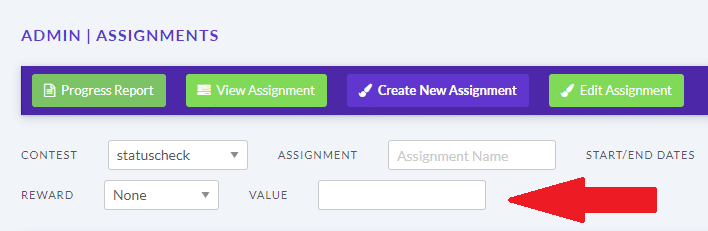
The next time you set up your class Assignment, you’ll notice a new option – “Rewards”:
This is a brand-new way to make sure your students complete their work on time!
A “Reward” is a cash bonus that your students receive when completing the assignment.
This means students who finish their assignments get an instant boost in the Class Rankings – the perfect incentive to get their work done on time!
Prerequisites: Self-Paced Learning!
You might also notice another option when you’re creating your assignments – “Prerequisite”:
For the first Assignment you create for your class, this will be empty. This new tool will let you “queue” assignments for your students to let them learn entirely at their own pace.
By setting a “Prerequisite”, students will need to complete one assignment before they can progress to the next. As soon as students complete the “Prerequisite”, students are prompted to continue to the next set of lessons and activities, letting them move at their own pace.
Typical Use Case
As a teacher, I want to set up activities for my students every week, and I want to make sure everyone completes everything in a certain order. However, I know that some students might take longer than others.
I would:
Set up my first assignment (“Week 1”), with a “Start Date” of today, with the first set of activities
Set up my second assignment (“Week 2”), with a “Start Date” of a week from today, with the second set of assignments. I would set my “Week 1” assignment as a prerequisite.
For my students, everyone starts today and start work on the “Week 1” assignment. Next week, students who finished the first assignment are prompted to begin the “Week 2” assignment.
BUT students who have not yet finished the “Week 1” assignment need to complete that first. As soon as they do, the Week 2 assignment pops up for them to start too.
Combining “Start Dates”, “Due Dates”, and “Prerequisites” give teachers a whole new toolkit for giving students pacing and structure to their experience throughout HTMW!
Badges
Our last, and perhaps biggest, addition for engagement is our new Badges. Starting this Fall, students will be able to earn badges by completing certain actions throughout HTMW. This could include things like:
Making their first trade
Trading 5 Healthcare Stocks
Shorting 10 Stocks
Buying their first Mutual Fund
Completing Personal Finance lessons in our learning center focusing on Credit and Credit Score
…plus dozens of other challenges
After a student has earned a badge, they can set it as “Active”, and it will appear next to their name on the Rankings Page and throughout HTMW.
Clicking another students’ badge on the rankings page will show all the other badges earned, giving students a better incentive to explore HTMW and find new ways to diversify their portfolio.
Students can also “level up” certain badges by improving their mastery of a concept, encouraging students to go above and beyond class minimum requirements.
All of these features are completely optional. You will have the option to turn badges off in your class settings, and continue to utilize Assignments without setting prerequisites or rewards. However, these are powerful new tools in your kit to drive student engagement, and we’re excited to serve your classes this Fall!
If you want even more, you can check out our awesome new Budgeting Game (where your students take on the role of a college student with a part-time job, or someone who just finished school starting their full-time job), plus hundreds of new lessons in our Learning Center, dozens of new customizable teacher reports, and tons of new ways to use our awesome stock market game on our ad-free version, PersonalFinanceLab!
Gold can be a sound investment because its supply is relatively constant, unlike that of securities and currencies. That’s because gold mining doesn’t increase the supply of gold by much on a yearly basis.
An ounce of gold today can buy pretty much the same amount of goods as it did 25 or 50 years back. In contrast, the purchasing power of the US dollar has reduced significantly.
Typically, when the dollar is weak, the price of gold moves up. For this reason, investors use gold as a hedge against inflation. If you too want to insulate yourself from the effects of inflation, consider investing in gold.
But how does the gold market work? How can you invest in it? And most importantly, is right now a good time to buy gold?
Continue reading to find out the answers yourself.
How Does The Gold Market Work?
There are three key drivers of gold prices: demand, supply, and investor behavior. While that seems simple enough, these three factors may often work in a counterintuitive fashion. For example, since gold’s supply is relatively constant, it’s considered an efficient tool for diversifying a portfolio during an economic slowdown or when inflation is rising.
How To Invest In Gold?
There are three main ways to invest in gold.
Physical Gold
You can buy physical gold in the form of bullion, coins, and jewelry. Most investors tend to invest in gold coins as they are universally recognized and most easily traded.
Like other gold investments, bullion and coins are a hedge against rising inflation. But they go a step further. Since you physically own them, you have full control over your investment. They are tangible assets with which you can do as you please. Physical gold provides security during an economic crisis and can even be used as currency if the situation warrants.
So how can you buy gold bullion?
One option is to buy gold bullion with Gainesville Coins. Since buying gold online is easier and more convenient, most investors prefer this option. However, if you want, you can also buy gold from a local coin shop.
Whether you buy gold online or offline, these tips will come in handy:
Verify the dealer’s reputation – Review the recommendations made by autonomous sources and customers. Another option is to check the dealer’s rating on the Better Business Bureau website.
Ensure the seller offers fair prices – Check the price of the gold before buying and factor in the dealer’s markup. Remember, bullion has a lower markup than coins, so you may want to invest in them.
Ensure that the seller has sound shipping policies – If you’re purchasing online, make sure your shipment is secure and insured. Also, ensure the vendor gives you a tracking number when they make a shipment.
Gold ETFs
The term ‘ETFs’ stands for exchange-traded funds. That means gold ETFs can only be bought and sold on authorised exchanges. As a result, you don’t have to worry about storing them or them getting stolen.
Also, just like shares, you can buy and sell gold ETFs multiple times during a single trading session. For instance, if you buy a gold ETF in the morning and the price rises sharply soon afterward, you may consider selling it to book profits the same day.
Easy and convenient as it is to trade a gold ETF is, it has few drawbacks. One, you don’t actually own a gold asset. You can only redeem it for cash—not gold itself. Two, you may have to pay a commission to your broker every time buy and sell a gold ETF. Three, any profits you make must be reported for tax purposes.
Gold Certificates
A paper document, a gold certificate represents your claim on a specified value or amount of gold. It’s issued by financial institutions and banks. Compared to the actual metal, they’re easier to exchange and handle. Just like in the case of ETFs, with gold certificates, you don’t need to worry about storing your asset or losing it.
However, gold certificates have one major shortcoming. They are just as good as the company that issues them. If the company goes out of business, you may lose your entire investment.
Should You Invest In Gold Right Now?
Even though gold prices have hit a nine-year high recently, investing in gold right now may be a good idea, especially given the current economic downturn. As said earlier, gold can provide financial cover during macroeconomic uncertainty and rising inflation.
Conclusion
Gold acts as a hedge against economic uncertainty and inflation. It also helps you diversify your portfolio. You can buy gold in different ways. But if you want to own physical gold, you should opt for bullion and/or coins.
Ruth Walter has been fascinated with gold ever since she was young and has spent most of her life learning about it. Today, Ruth works as a full-time writer who tackles about gold investing and other types of investments.
The coronavirus epidemic in the world can change entire industries and patterns of behavior of companies and consumers. The transition to online shopping can be a long-term trend, as well as the transfer of employees to a remote mode of operation.
The global economy is more affected by the number of people who are afraid of the COVID-19 coronavirus than the number of cases. Fear changes people’s behavior. And it changes the behavior of those who make decisions. Fear of the virus is changing supply and demand in the global economy. The proposal is affected by the suspension of production in China, which reduces global production.
Today, China’s share in the global manufacturing industry is about 25%. In 2003, when SARS was rampant, this indicator in China was only 11%. Today, China is a link in global supply chains. So stopping production in China will reduce economic activity in the world, and also affect the performance of other companies in the supply chain.
Of course, the business was concerned about the volume of stocks. During the lunar New Year period, companies using Chinese components may have more stocks than at other times of the year. It is possible that someone could change the supply chain, although last year’s trade conflict between the United States and China showed that this takes time. These measures will help mitigate the impact of the suspension of work in China, but not fully compensate for it. Technology can mitigate some of the problems. Someone can work from home, economists, for example. That is, part of the global economy is able to work even in quarantine. This does not cancel the negative effect, but it is a way to reduce it.
And what happens to demand? Fear has reduced the demand for certain services. In China, people stopped going to shopping centers, cinemas, etc. The demand for travel fell all over the world. At the same time, online trading is gaining momentum in some places. And the demand for online computer games in China has grown by 40% year on year.
Not the same issues for currencies
When it comes to currencies though, it’s hard to say that the pandemic will do anything bad to the largest ones such as USD, EUR, and JPY. Statistics show that fx trade volumes have increased significantly during the pandemic, but mostly in the “selling” department of exotic currencies.
This may alter the economy as well, but will most likely introduce changes only for the smaller currencies.
Distractions
People who are at home with their family all the time need to be distracted by something. The online economy is a great distraction. This is one of the key differences between the current situation and the times of SARS. The growth of online shopping will reduce the impact of the epidemic on demand. The effect as a whole is still negative, but it is weaker than in the past, thanks to Amazon, Netflix, and online games. The impact on the demand of a company depends on what it sells. Luxury brands are suffering. Such products are bought personally, and not on the Internet. Going to a luxury store is part of the pleasure of shopping. But for basic products, the transition to online shopping can be a long-term trend.
For emerging markets, the effect of coronavirus is to reduce resource demand. Declining demand for raw materials such as copper can recoup losses as production resumes. This demand will support prices in the future. But with energy, everything is not so simple. A canceled flight will remain canceled. China is a large and not very efficient consumer of raw materials. A decrease in China’s GDP by $1 per capita has more severe consequences for global resource demand than, say, a similar decrease in UK GDP.
This is also important for world inflation. The overall outcome of the epidemic is likely to be a decline in global inflation. This is because reduced demand for raw materials leads to lower prices for it. A smaller demand for services is also likely to lead to lower prices for them, at least in the short term. Problems in supply chains, in theory, can raise the price of finished goods.
However, the business is usually not in a hurry to raise the price of goods if supply problems are temporary. If a company expects the virus to cause problems for a month or two, it is unlikely to upset buyers by raising prices for such a short time. It is worth noting that during the trade war between the United States and China, American companies generally did not raise selling prices to pay trade duties.
Corona-virus can make long-term changes to the economy. It is hoped that the virus will begin to weaken in a few weeks. And when the epidemic begins to subside, the fear of the virus will also decline.
For many people, stock trading seems like one of those careers that uses a lot of confusing numbers. Then again, it’s nothing like rocket science and it’s nothing like any other career. Trading has its advantages and as long as you have the passion for it, you can become successful at a job that’s highly lucrative.
Just like any other career option, being a stock trader requires a lot of forethought. You have to understand that it’s a whole new world and you need to figure out how the system works.
So, here are a few tips to consider if you’re planning to get started as a stock trader.
1. Get to know the market
The most basic thing you need to know is how the stock market works. On the surface, it can be intimidating with all the numbers and terminology, but as you go along, you’ll eventually see how easy it is to find your way around. There are also lots of ways to learn about the stock market.
You can check out sites like Investopedia or Yahoo Finance. You can even watch YouTube videos that give you a simplified explanation of the most important aspects of the stock market.
2. Gather the finances
Before you start trading, you need to find out how much money you need to get things going. It’s important to remember that you have to work with a broker who earns a commission from you. And depending on the brokerage you selected, you will need thousands of dollars minimum to open an account and start trading.
Where will you get that much money? Look at your savings accounts, say your Roth IRA, which should have enough to cover your starting capital, commissions, and other fees required by your broker.
3. Determine the right security
Stocks are not the only way to invest your money. Aside from stocks, you also have the option of choosing bonds, annuities, exchange-traded funds, and other types of securities.
It can be overwhelming at first, but with advice from your broker, you can identify the right options based on your goals and what other people think. Be critical and never jump into a bandwagon that’s too full. Take your time and think it through before investing your money.
4. Diversify and monitor
In the world of trading, it’s always best to diversify your portfolio as it grows. The rationale behind this is that you need to distribute your risk, so if one stock is underperforming, you still have other assets to help cushion the blow to your bottom line.
Aside from a diversified portfolio, you also need to closely monitor how markets are doing. You can check out stock research sites that provide updates about companies and the overall health of the economy so you can make sound analyses and execute better decisions.
Stock trading isn’t as complex as most people think. You just have to understand how the system works and how you can make the best possible decisions for making a ton of cash.
Stock trading can be overwhelming if you’re a beginner. Terms such as charts, prices, bull market, and bear market can be confusing. If you’re not well-versed in stock market principles and theories, all your efforts may end up in tragic financial losses.
Therefore, you must become technically capable and learn the ways and means of stock trading. Familiarizing yourself with the process of stock index trading or trading in individual shares will help you earn profits in the market.
Below are the six basic things you should know about stock trading.
What Is Stock Market And Stock Trading?
A stock is a security that grants you part ownership of a corporation. Simply put, a stock market is a place where stocks are bought and sold. Pepperstone’s trading platforms and other such platforms help you buy and sell stocks by providing access to the stock market.
Stock trading involves buying and selling stocks to make profits. There are different types of traders. Many stock traders are day traders, implying that they close their positions within the trading day. Some traders hold their positions for many days or weeks. Active traders trade several times in a month or a year.
The Basics Of Stock Trading
Successful stock trading isn’t based on luck. It requires the application of some basic principles developed based on experiences. Although intellect is an advantage in any task, a higher IQ is not a guarantee for trading success.
However, you must understand the following basics before you can start trading.
Educate Yourself
Spend some time learning the basic principles about the stock market and also the stocks which make up the market before making you start trading. Take into consideration the factors driving your stock. Familiarize yourself with terms such as market capitalization, Earnings per share, Price-Earnings multiple, and so on. Understand technical and fundamental indicators that can help you to decide when to buy or sell the stock. You should also understand different types of market orders such as stop market orders, limit order, trailing stop-loss orders, stop-limit orders, etc. You should also have a basic understanding of the correlation between the individual stocks and economic activity, GDP, inflation, fiscal deficit, foreign exchange rates, prices of crude oil, etc. Different stocks have different factors that influence their price movements.
Buy Low And Sell High
The very basic thing you should know as a stock trader is to buy stocks when prices are low and sell them when prices go high. Of course, the trick is in finding the perfect price to buy and the best price to sell. This can get easier if you know the basics and gain experience in trading.
Stock Trading Involves Significant Risk
Stocks are often volatile and there’s no guarantee that they’ll keep rising or falling. If you’re thinking of short-term trading, you must do your homework and accept that your judgment may turn out to be wrong. So, you may lose money despite knowing the basics and analyzing the stock for hours.
Avoid Taking Leverage
Leveraging means borrowing money to buy or sell stocks. Banking institutions and brokers allow you to trade with less money than what is required to buy or sell the stock. This sounds pretty good when the market moves in the anticipated direction. However, when things don’t go as planned, you lose a lot of money. In addition to your initial investment, you will have to pay interest and other costs to your lender. Leverage, consequently, is a double-edged sword. Leveraged trading must be done only after understanding its risks and gaining enough experience in trading.
Diversify Your Investments
It may be enticing to go “all in” on a promising trading setup. However, putting too much money into a single trade is a risky move. You may end up losing all your capital if you make a wrong decision. Remember to trade in small quantities, especially if you’re a beginner.
Brokerage and taxes
You must know the brokerage commission that’ll be charged by the broker for each trade. Agree on the brokerage rate before you start using a broker for trading. There are several brokers to choose from and you can negotiate brokerage, especially when you trade in large quantities. Government taxes also impact your trading profits. So, you must be aware of these factors.
The Bottomline
As with all specialized skills, it takes some resources and time to understand stock trading. Yet, the bonus of learning is life-changing. Learn the above basics and expand your knowledge to learn the art and science of stock trading. Start trading only after you’ve learned the basics. Over time, you’ll improve and eventually develop a process that helps you earn consistent profits.
Chris Adams loves to read materials and write articles on investments. Chris fully understands how important investments are to a person’s financial health, which is why he aims to inspire others through his articles.
It is no secret that the stock market can be a highly uncertain place. However, some principles have survived the test of time and have brought success to plenty of investors over the years.
Because you, our user base, is primarily interested in the stock market. We decided to round up some of those principles from a wide variety of sources across the web, including expert websites like Invezz and advice from online traders.
1. Hold on to a winner
Certain investments can increase manifold in value. They can bring you a lot of money, but for that, you need to hold on to them even if they have increased many times before. If you think that the stock can continue increasing in value in the future, then you should discard the traditional rules and hold on to it for its own merit.
2. Sell the loser as soon as possible
Once a stock loses money, there is no guarantee that it will gain money in the future. You have to live in reality and bite the bullet if you see a stock performing poorly for a consistent span of time. It is difficult to acknowledge the presence of losing stocks, it makes us feel like we have failed in an important exam, but it is only human to make mistakes. Instead of holding onto the stock and losing even more money, it is better to sell it off to prevent any losses thereafter.
3. Be careful of what you listen to
A stock tip may sound realistic, but that doesn’t mean you go chasing after it. Before making any investments, conduct thorough research about the company. Sometimes, tips actually do work, but it is a risk nevertheless, and you should always know where you are investing your money.
4. Don’t sweat too much about the P/E ratio
A lot of investors emphasize price earning ratios to a ridiculous degree. It’s not a very good thing to do, because P/E ratios are most effective when used in combination with a list of other analytical processes. A low price earning ratio does not undermine the security of the stock.
5. Select a strategy and then hold on to it
There are many ways in which you can select stocks. However, no matter which strategy you choose, make sure you stick with it throughout. When you move from one approach to another, you become a market timer, which is not a good place to be in.
6. Always keep the future in focus
When you invest, you will be required to keep yourself updated and make all decisions after a careful analysis of the prospects. Instead of the past of the company, look at its future. If you feel that the stock’s value can skyrocket a couple of years from now, don’t stop yourself from investing money in it.
7. Keep an open mind
Not all good investments are backed by brand awareness. So, do not discourage yourself from investing in a company just because it is not a household name. If it seems like a good investment opportunity, you should go for it.
The energy sector is extremely important for any country. From gas to electricity, the modern global economy runs on energy and its uninterrupted supply. Throughout the past century, many countries made enormous fortunes out of the energy sector, particularly fossil fuels. The entire region of the middle east achieved its undeniable success thanks to the massive oil resources that can be found within the area. However, things are changing and it is affecting investor confidence in the sector.
Many people do not realize that even some of the most progressive and developed countries today achieved where they stand today through the exploitation of fossil fuels and natural resources. The United States is one of the best examples. The world’s most powerful economic and military power made its fortune with the vast use of fossil fuels. As the US fuel reserves started fading away, the country began importing crude oil from numerous Middle Eastern and African nations. As a result, many countries, particularly in Africa depend on the US export value almost entirely. This is the reason why the US crude oil price plummeting earlier this year had a major impact on numerous nations all over the world.
Oil remains an important part of the global economy. With billions of cars, factories, and individual or corporate systems to drive, this resource truly fuels the growth in all aspects. However, this dominance of oil is coming to an end. The new millennium brought in some never-seen-before challenges to the table. Climate change is already affecting millions of individuals, especially those residing in coastal communities. According to numerous scientific papers, communities near waters, including some major cities such as Amsterdam or Venice are at great risk of simply disappearing if climate change continues.
The youth movement started by Gretha Thunberg revolutionized the world. School strikes that the young global activist started in her native Stockholm spread all across the world with tens of millions of active participants. The youth demand climate justice and they are achieving a lot by pressuring governments, companies, and influential individuals.
The change is coming and it is quite visible
Climate change is not an issue that can be tackled overnight. Winning over this major problem requires a complex approach and joint efforts from the governments, businesses, and individuals. Fossil fuel companies are under enormous pressure now. Being in the sector is extremely unpopular and the stock values reflect on the current situation perfectly. The first important step forward in creating a greener, renewable source of energy that will be efficient and cheap. This is exactly what numerous companies all around the world are doing, including the Italy-based Enel. the latter has always been a renewable energy-oriented company but in recent years, along the waves of protests against fossil fuels, the Enel Group has almost completely abandoned natural gas. Instead, this major corporation with revenues exceeding 73 billion euros is investing heavily in renewable sources of energy. Most notably, Enel is currently working on a number of major solar farm projects all around the world, including one in India.
The example of Enel shows how companies within the fossil fuel industry can transform into green businesses. The enormous wealth that oil corporations own ensures the possibility of investments in the green energy sector. Surprisingly, this is what some of the biggest state-controlled corporations have been doing in the Middle East and Asia.
Oil exporting countries are trying to diversify their economies
Everything with this topic is interconnected. The changed attitudes towards fossil fuels have forced many countries and companies to shift from oil production to investing in green, renewable energy. Middle Eastern countries like Saudi Arabia and the United Arab Emirates skyrocketed their wealth over the past few decades through oil production and exports. Those nations managed to become some of the richest over the course of 30 years while beforehand, the vast majority of them fell under the umbrella of the third world. Dubai, which used to be a fishing village is now one of the richest, thriving metropolises in the world, attracting millions of people annually. The proportion of migrants is also growing in those nations amid attractive job opportunities and dynamically developing economies.
However, the governments of Middle Eastern oil magnate nations have realized that the fossil fuel industry will not support their growth for much longer. Innovations from Tesla and other companies show that the future without oil is closer than we might have expected. Additionally, the global social attitude towards oil companies has become quite bold, putting extra pressure on companies and economies. This is the very reason why countries like the United Arab Emirates are investing in green projects, such as solar energy plants, electric public transport networks, and sustainable buildings. The diversification of those economies goes beyond the energy sector, pushing for fostering industries like tourism and services. All in all, the entire energy sector is striving towards a greener future and the investors are responding positively to it.
The foreign exchange market, also known as Forex, is touted to be the largest one in the world. A growing number of people are eyeing the opportunity to trade on the Forex market. This hardly surprises anyone familiar with its advantages, and namely no commissions, no fixed lot size, low transaction costs, high liquidity, and others.
Before you decide to place a trade on the Forex market, you have to be acquainted with certain strategies that will help you achieve the goals you set for yourself. There are hundreds of tips for Forex traders. However, some approaches appear to be better than others. Тhis guide about Forex strategies will cast light on some methods that are tried and proven.
Combining Relative Strength Index, Bollinger Bands and EMA
The term Bollinger Bands (BBs) is used to indicate market volatility. BBs consist of a centerline and two price channels (also known as bands). It helps traders to easily outline the trend which currently prevails on the market. There is a good-enough number of strategies associated with this indicator.
The Relative Strength Index (RSI) shows if an asset is overbought (trading takes place at a price higher than the assets’ intrinsic value) or oversold (assets are traded at a lower price than their fair value). It is considered that if RSI is over 70, the asset is overbought and if it is under 30, it is oversold.
One of the strategies we consider successful is based on a 75-period Exponential Moving Average (EMA), 20-period BBs, and a standard 14-period RSI. The period can be expressed in days, hours, etc. In case the candle closes the charts above the 75-period EMA and the BBs’ middle line, while the RSI is at a level higher than 50, then traders are recommended to go for long entries. In other words, traders buy assets hoping for the price to increase. In such cases, the market is called bullish.
On the contrary, investors need to opt for short entries (you sell in first, hoping for the price to drop) when the candle closes the charts below the 75-period EMA and the BBs middle line, while the RSI is at the level of 50 or lower. It is important to explain that when the price is expected to fall, the market is referred to as bearish.
The best way to set stop-loss orders is to look at the charts. When using this strategy, you can determine your loss levels based on the 75-period EMA, the lowest point that the signal bar indicator reached, or the lowest level of the most recent 5-period EMA.
Combining Fast and Slow Stochastic Oscillators with EMA
This strategy is built around the idea to keep track of the price rebound from the EMA. An important condition is that the fast stochastic oscillator should be in the opposite area of the slow stochastic. There are two zones where these can be found, and more precisely the overbought and the oversold areas. The best way to know what further actions to take is to observe the reversal bar pattern. The bouncing of the price off the 20-period EMA is considered an entry signal.
As far as the stop-loss order is concerned, investors are recommended to set a limit at 10 to 15 pips above the high of the reversal patterns in case the market is bearish and below their low if the market is bullish.
Combination of MACD and ADX
When tailoring personalized Forex trading strategy, investors should take into account the significance of open interest as it determines the upcoming trends and trend reversals. MACD (Moving Average Convergence Indicator) is used to keep track of the possible movements of the trend, as well as reversal points and the strength of the trend.
Due to its simplicity, many investors created their strategies around it. Assuming that the Positive Directional Indicator (+DI) is above the Negative Directional Indicator (-DI), it is a signal that investors can go for long entries. On the contrary, if the -DI is above the +DI, investors are not advised to take further actions.
Combination of EMAs and Parabolic SAR
Assuming that the candle closes the charts above a designated EMA period, the Parabolic SAR is under the candle, and the Slow Stochastic is not overbought, this is considered a favorable condition for investors to go long. In case the signal bar closes the charts under that designated EMA period, the Parabolic SAR is above the bar and the Slow Stochastic is not oversold, the market is bearish and investors are advised to go short.
Trading Pullbacks Following Gaps
The term “gap” is used to denote sharp fluctuations on the market resulting in a little trading activity. Usually, such situations are presented on the charts with a gap between two candles. As far as the Forex market is concerned, such gaps can occur mostly on Sunday evening.
It is of crucial importance to determine what kind of a gap occurs as this determines whether the gap will be filled out or not. What is more, it allows traders to predict how the market will look like after the gap. There are 4 major types of gaps – continuation, exhaustion, breakaway, and ordinary gaps.
Providing that a gap occurs, different investors will take various approaches. The best you could do out of such a situation is to buy when the price drops towards the support level and sell when the price starts rising towards the resistance zone. In case the price breaks up through the resistance zone, you are again recommended to buy. On the other hand, if the price breaks down through the support level, the best option for investors is to sell. As for the stop-loss orders, investors are advised to set them several pips below the support zone.
All over the world, the loan market can prove to be a confusing concept to fully get your head around. In the US, it works a little differently to elsewhere and there are some specific terms that you should get your head around if you want to totally understand the market as well as which loans are available and not just find a suitable loan to start a new business.
Naturally, there are many different types of loans available, these may vary depending upon whether you want to start a business like an online travel agency or you are looking for a personal loan in order to buy something you need or deal with other financial issues.
Loans actually involve more than two parties, even though it may be assumed that there is just a lender and a borrower. The market is more complex than that. Loans, and the options on loans, form a financial market that can be traded. Investors play a key role.
Traditionally there are fixed income products within the loan market, but these do not necessarily have a high upside in terms of income. The loan market has driven the investors to look for better returns and this often leads to them turning to the Leveraged Loan market as opposed to the fixed income market. These types of loans also allow for diversity within a portfolio that may have less confidence as a result of the European debt crisis and want to mitigate investment risks elsewhere in the world.
Investment-grade loans are agreements between lenders and borrowers, but sub-investment grade loans are syndicated, so they are a balance of a private equity share of a business or business loan.
What Is a Leveraged Loan?
Leveraged loans are common for investors looking for value. There aren’t actually rules for how to define a leveraged loan, some just use the interest margin as a guide, or the rating provided such as Ba3 or BB. Rating agencies such as Moodys set these ratings based on risk levels.
Leveraged loans are higher interest and given to people who may struggle to get traditional fixed-rate lending. As such, they are at a higher risk of the lender defaulting. This means more potential returns, but a risk of defaulting that is high.
Leveraged loans are given to both companies and individuals with a history of debt issues. Lenders find that these have more of a cost to the borrower and therefore more of a chance to return higher yields, but there is risk involved if they do not get the money paid back.
An interesting overview of some of the issues that come with defaulting can be found by reading “The Big Short” – an overview of the financial crash in 2008.
The LMA and the Loan Market
Since the issues around the financial crash, the role of the LMA has become even more vital. LMA stands for “Loan Market Association”.
They promote syndicated loans across the world in many different regions and help to work with lenders, law firms and other borrowers.
The LMA was actually formed in 1996, but they continue to grow and cover over 65 countries working with commercial, investment banks, law firms and even rating agencies.
They promote the benefits of these leveraged loans and try to remove any of the barriers and jargon/confusion surrounding the industry for those who want to get involved. The loan market needs investors in order to function. The LMA helps with market guidance, education and even regular discussion with regulators and legislating bodies.
The Loan Market for Consumers
The loan market varies hugely based on a credit rating. If your credit score is good then the options for P2P loans and bank loans will probably be a lot more, and you may also receive better rates. People investing in these syndicated loans can do so with minimal risk.
People looking for personal loans for fair credit or even for poor credit scores will find they have to pay a little more in terms of interest, as well as having their options for lending limited. It’s worth remembering this when considering loans as investments as there is greater chance of profits but also a risk of having to deal with a lot of people defaulting on the loans, especially if the country is in the middle of an economic downturn.
Conclusion
While the loan market is quite complex in a number of ways, our basic overview should help you to understand some of the products available for lenders and also, the prospect of making money for investors involved in the US loan market. A sturdy portfolio can include both leveraged loans and fixed price, low-risk loans with less yield. The amount of risk taken is up to the individual.
When it comes to your business, you try to do everything that it takes to build the credibility of your business. Therefore, it only makes sense that when it comes to filing sharing with your clients and partners, you take the same precaution and make sure that nothing goes wrong.
With data breaches happening every other day, it is very difficult to assure your clients and partners that your company is safe to do business with, and you’ll take care of the sensitive information of your clients.
So, if you are looking for a reasonable solution to share your data and files through a secure platform, then Firmex is your answer.
Here are some of the reasons that make a secure file sharing platform a must-have for your business:
It is Convenient
Different file sharing solution providers make sure that their clients have ease in sharing and receiving the data and files easily. It is important to have a convenient platform for file sharing because not all your clients are tech-savvy, and you certainly don’t want to lose a client just because they think it is too difficult to share information with you. So, one of the reasons that make a VDR or a file-sharing platform a must-have for your business is its convenience.
It is Cost-Effective
Let’s face facts. The ultimate goal of any business is to make maximum profits and savings by reducing the business cost. Therefore, the cost-efficiency of file sharing solutions is another thing that makes it compulsory for your business. To understand it better, take the example of the IT department. If you can outsource all the IT services, then you’ll be saving equipment and employment cost. The same is the case with virtual data rooms. In simple words, you are saving the cost of a whole department by outsourcing a file-sharing solution.
It Saves a Lot of Time
It is a very famous saying that time is money. It is indeed true because we are living in a digital age, where speed is everything. If your competitor is succeeding and you are not, then you must know that it is their speed that is making them thrive.
Speed in business means your responsiveness to your clients. A file sharing solution like Firemax makes the whole process of data sharing and transfer very quick and swift. It means that you can share, send, and receive data and files in the blink of an eye – another reason why you should consider getting a virtual data room right now.
Helps to Build Client’s Trust
Lastly, the most important thing about any business is how authentic and secure they are. Due to massive data breaches, clients are a little paranoid in doing business with the people who are unable to assure them that their data will be secured. Having a secure file data sharing solution will give you the opportunity to give security assurance to your clients about their data.
People all over the globe value precious metals. Travelers, explorers, leaders, and collectors wanted and acquired these metals in the olden times and until now. These precious metals were regarded for their beauty, and they were associated with wealth and power.
In the modern world, investors collect these metals to diversify their assets. Owning precious metals can do for an investor what brokerages and bonds can’t – therefore, owners of precious metals will keep their wealth when other kinds of assets fail.
The online world now gives a convenient and non-troublesome opportunity to acquire gold, silver, platinum, and copper. However, there are some things a beginner has to remember when investing in precious metals.
Precious metals are outstanding in portfolio diversification. The value of these properties hedges an owner against the effects of inflation. It is smart to have not only gold but also own other metals that have unique advantages in specific opportunities.
Silver, platinum, and palladium are items that can do for an investor what gold has a disadvantage. In return, what they cannot do can be done by gold.
The best way to diversify a portfolio is by owning physical metal. However, investors can also place investments on metal ETFs, mutual funds, the derivatives market, and mining company stocks.
Know the Metals
There are four leading players in the precious metals market. Learn the metals’ features and each of their advantages. Gold, silver, platinum, and copper have different edges in investment.
Each metal can help reach unique goals that can result in earning. Anyone who wants to start investing in precious metals will benefit from good enough basic knowledge.
Gold
Gold is durable (it doesn’t rust or corrode) and malleable precious metal, and it is an excellent conductor of electricity and heat.
It is used at a scale in dental and electronic applications. However, its high cost makes choosing it over other conductors like silver and copper impractical.
Gold comes in different forms, including jewelry, coins, bars, and other Bullion.
The value of gold ideally rises by the day, and mines are slow to produce, making its supply decrease. Emerging economies around the world are updating their commodities, and they want gold in their markets.
Advantages of Gold:
It is a secure store of value. Use it like cash savings, not in the bank but, in private inventory. A collection can gradually grow as time goes by, and the price per weight of the items ideally rises.
It is excellent as a hedge against inflation. As the Dollar value falls, the Dollar per ounce of gold increases. Other assets like stocks are damaged during economic downswings. Hence it is wise to own physical gold alongside liquid investments to counter the adverse effects.
It is a sufficient currency during war. When unfortunate global or civil upheavals occur, and currency becomes insignificant, gold and other metals grant institutions and individuals’ access to food, shelter, and safety.
Silver
People place value on silver as it is both a precious and an industrial metal. Making investments in silver is wise as these are times of digital upsurge. Hardware and electronics applications require silver for its effective conductivity.
The industrial application of silver makes it an excellent metal to store. A hefty amount of this metal can give an investor significant returns, especially when innovations and developments in technology come up.
Silver has less value per weight than gold. Therefore, the metal can be traded more cheaply, but it is highly profitable when done correctly.
Advantages of Silver:
Silver is an excellent store of value, although not as much as gold.
It has applications in electronics. The bigger the world populace, the more digital devices there are. Digital applications run on high-tech hardware that uses microcircuits that require silver parts. It is also used in producing batteries and superconductors.
Platinum
People trade platinum too. This metal values at a higher price than Gold during stable economic situations as it is a rarer metal. However, during bad economic weather, the need for platinum declines, and so does its value.
Advantages of Platinum:
While gold is not significantly increasing value, platinum will give more returns. Acquire Pl during bad economic situations while it is cheap and profit when stable times return.
Platinum has a higher-class industrial application. Tech and motor industries use it as a chemical reaction catalyst to improve automobile oil performance. Its non-corrosive properties are excellent for use in medical instruments and dental equipment. It is a non-toxic metal that is ideal for sensitive parts of dental and surgical apparatus and machines.
Copper
Copper, a semi-precious metal, has excellent value as a practical and cost-effective industrial commodity.
Advantages of Copper
Investors who own a significant amount of copper can enjoy high returns when a surge in production in the industrial market occurs.
Copper is the main ingredient for the production of wires that are used everywhere.
There are various ways to earn through these valuable metals:
ETFs
ETFs, short for Exchange-traded funds are a scheme where a company allows investors to deposit their money, and that money will be used by the company to acquire gold physically. They are asset-backed investments and depend highly on the expertise of the trading institution.
They are a convenient and liquid method for people to profit from precious metals. It is similar to putting money on a brokerage online. However, with ETFs, an investor has no physical access to precious metals. The trade is limited to buying shares when the prices are down and selling when they are up, all online. Also, when an ETF company fails, its investors will lose their money.
Common Stocks and Mutual Funds
Investors can fund mining companies for profit shares. They have to find a trustworthy company to be sure there will be a profit.
Common stocks and mutual funds allow investors to earn from precious metals. These schemes can be profitable, but they are no way for novice investors. More often, investors who do these investments hire managers to handle the funds.
Futures and Options
Investors can buy gold today but have it delivered later.
The futures and options market provides liquidity and benefit to investors who highly risk on metals. These modes of investment can either garner the highest earnings or the most significant losses.
Stock Certificates
Investors can own gold without keeping it without “actually keeping it.” They will only receive a piece of paper that says, “they own this piece of gold.”
Certificates remove the hassle of physical ownership of metal assets. However, they also eliminate the more significant benefits. When a crisis comes up, virtually nobody will exchange food for a piece of paper.
Physical Ownership
The most excellent method to invest in precious metals is Physical Ownership. It is now easy to access these metals because of the availability of online stores and Bullion services and delivery online. This method of investment gives an investor the ability to control the property entirely.
Physical precious metals have various forms, and one of the most widespread is Bullion. Bullion is any shape of precious metal that is appraised via its weight and purity.
Bullion can be bought as bars, coinage, commemorative coins, rounds, and even bullets.
Invest Today
Precious metals increase in value in time, and people should start investing soon. The ease of owning Bullion via the digital world should be enough reason for a person to begin a precious metals investment journey.
Precious metals protect owners against inflation, and it is a safe store for a monetary value that secures people’s retirement.
An inventory that has diverse types and shapes of metals has more extensive opportunities in the market. Subscribe to a Bullion service and own a reliable and profitable precious metals inventory.
Being able to make a payment wherever you are, at any moment of the day, is one of the blessings of our time. Whether you want to make an online purchase, to send money to a friend or to pay for something in a store, it’s a relief to know that you can do all of these with your smartphone alone.
Digital wallet apps allow you to track all your transactions accurately in real-time, exchange currency, make investments or transfer money internationally. Let’s see how.
1. Making In-Store Purchases
If you want to use your smartphone to pay in stores, you can make it act as a physical card. You can pay thus almost anywhere where you would usually pay with your credit or debit card. Apple users can use Apple Pay for in-store purchases. However, since Apple Pay uses NFC technology, it only works for contactless payments.
For Android devices, the best option is Samsung Pay, which uses a technology called Magnetic Secure Transmission that allows users to pay anywhere where a credit or debit card is accepted, with no need of participation from the merchants or other limitations.
2. Paying Friends
The most popular app for sending money among friends is undoubtedly Venmo, available for Android and iOS devices. Easy to use, the app gives users the option to send money to mobile numbers, Facebook accounts or email addresses.
Adding that the transfers are free, Venmo’s popularity can only grow in the future. Google Wallet and Square Cash have similar features as Venmo, yet don’t have the same outreach at the moment. A plus for Square Cash is that the receiver doesn’t need to have the app to get the money.
3. Making International Transfers
The ability to transform your phone into a digital wallet can be incredibly convenient when you’re a traveller who has to switch between various currencies regularly or someone who has to make regular international payments. In this case, TransferWise and Revolut are two digital banking options for international money transfers.
While Revolut is only accessible via an app, TransferWise has an official website along with an app. Both offer much favourable exchange rates than any traditional bank and give you the chance to hold accounts in dozens of currencies. All manageable with a regular Android or iOS device.
4. Storing Cryptocurrency
The massive popularity of Bitcoin has made merchants embrace cryptocurrency as a valid payment option. If a while ago, buying and storing Bitcoin and similar digital currencies seemed like something reserved for technical people who understood concepts like blockchain, encryption and mining, today cryptocurrency is easily accessible to any regular Internet user.
Having an online bitcoin wallet on your smartphone is convenient if you want to make secure online payments, store your cryptocurrency as an investment or make personal transfers. Since more and more merchants are accepting Bitcoin payments, the value of owning Bitcoin is predicted to grow. From your digital wallet, you can buy and sell Bitcoin freely with just a few clicks on your touchscreen.
As users discover the wide-ranging benefits of mobile payment applications, popular companies try to come up with new technologies that can make financial transactions quick and secure. If you want your smartphone to function as a digital wallet, you already have plenty of attractive options to make that possible.
Traditionally, the tech industry was male-dominated society, but this is not the case anymore. “Now women play an equally important role in this domain and have been doing wonders for quite a while now”, says Laura Garbers, a career coach from CraftResumes. All the leading tech organizations realized the importance of mixing gender workforce and how it can add value to work culture and productivity. Now we can see that people are deliberately hiring women, and some people prefer them over males.
There are numerous success stories of wonder women shared by Forbes, who made their mark in the tech world with their vulnerability and dedication.
The woman who was associated with law and court, but she surely knew that she could create her own destiny. Initially, her resume was about clerkship with Supreme Court Justice Anthony Kennedy, but now she leads a $350 million cryptocurrency fund. Before being a part of the tech world, she didn’t know what cryptocurrency was, but she made sure to pave her path through it and now acts as a role model for millions of people all over the world. She became VC of the company and continued to play a prominent role in blockchain technology.
A rare woman who made her mark in various aspects and earned up to $218 million. She knows how to make her way through different businesses and added value to them with her expertise. Her software company has value around $1 billion, and apart from that, she also plays a significant role in Estée Lauder.
The best thing about her is that she knows her strengths and utilizes them in an efficient manner. “I’m a lot of things, and self-aware is definitely one of them; I knew that I was not somebody who was going to start something myself”- says Jennifer Tejada.
She is the Co-Founder and CEO of Snowball Wealth, a much-needed platform to help students to deal with student loans and debts. They provide free recommendations and affordable coaching, which can guide students to get through this phase in an easy manner. Before becoming an entrepreneur, she has worked in Google and Goldman Sachs. She is a perfect example of beauty with brains and was listed in Forbes 30 under 30 for playing a prominent part in the tech world.
Rachel Mushahwar
A person who is considered as a role model for innumerable women and who aspires to achieve what she worked for throughout her life. Rachel is a Vice President at Intel. She made her way through a rewarding career, but the journey was surely not an easy one. She worked for it, day and night. The path was never straight nor smooth, she had to pave it and made sacrifices to be where she is today. She learned valuable lessons throughout her journey, and today she appears as a strong name and personality in the tech world. Rachel shaped the data-centric future of technology and the communication world.
She won numerous titles which backed up her credibility and professionalism, “Most Admired Women in Business,” Top Ten Women in Technology” and “Top Industry Transformers” are few titles she was awarded. Forbes featured her interview for her remarkable performance.
Women of Color In Tech Industry
In all these years, we have seen women playing a prominent role in colleges and universities and acquiring more education as compared to men, but not all these women choose to pursue their career in the technology world. We can not say that the technology world is gender biased, but it also faces racial discrimination too. Currently, Pinterest has the highest rate of women employees who belong to minority groups, and it makes the winning number of 8%.
How do women continue their tech careers?
All those women who enter the tech world have different goals and objectives to pursue. Some want to climb the corporate ladder while being a prominent part in the industry while some prefer to start with their own business and come forward with a start-up, some also prefer to relate with the technology world while opting for some non-technical job.
If more women are needed in this industry, then there are some points to be considered, which makes it convenient for a woman to grow professionally in this sector.
Mentoring Programs
Networking Opportunities
Flexible Working Hours
Personal Development
Workforce Diversity
Quarter of Women are in Tech World
If we look into the tech world, we’ll realize that almost 25% of women are in this field and making their mark with tremendous efforts. We can expect this number to grow with time and expect that men and women ratio would be the same. To help women opt for a tech career, they should be provided with opportunities, so they do not have to quit at the mid-career level. The majority of women quit their growing careers or switch industries due to certain factors, some of which are listed below. Hubpost mentioned the reasons and percentages regarding women leaving the tech world.
30% of women leave their careers due to working conditions. They find it difficult to bear long working hours, non-competitive salary packages, and when they realize that there is no career growth.
27% of women find it hard to have a work-life balance. All that extra time spent traveling makes it difficult to manage families alone.
22% of women lost their interest in work with the passage of time. With numerous other responsibilities and commitments, their priorities change with time, and they prefer other things over work.
17% of women quit due to the unfavorable circumstances and environment they are working in. At one point, the environment becomes toxic if proper measures are not taken to improve the work culture.
The so-called trade war between the US and China shows no real sign of abating, with nations such as Taiwan and Vietnam having recently been dragged into the ongoing conflict.
Those involved are now causing a potential stand-off with Hong Kong, following China’s controversial plans to introduce a New National Security Legislation in Hong Kong with a view to prohibiting terrorism, subversion, splittism and any behaviour that has the potential to threaten the safety of citizens.
The fear is that this purposelessly vague legislation would be manipulated by China to assert authoritarian control over the region, while eventually creating a scenario that would threaten Hong Kong’s status as Asia’s finance capital. We’ll explore this below, while assessing the impact on the Hong Kong dollar and the economy as a whole.
Delving Deeper into the Standoff and its Impact on the HKD
As the virus spread to the states and became a global pandemic, Donald Trump and his administration were quick to apportion blame to the Chinese government, creating further tension between the two parties and causing a sudden escalation in the conflict.
This escalation has also engulfed a number of nations, with prominent semiconductor chip manufacturers in Taiwan recently at the heart of a tug-of-war between China and the US. In the case of the threat to Hong Kong, the US has announced that it won’t allow Hong Kong’s financial autonomy to be compromised, with White House advisor Larry Kudlow reportedly saying that this would represent “a big mistake” on China’s behalf.
The recent conflict and uncertainty has seen the USD make considerable gains against the Hong Kong dollar, with the USD/HKD continuing to hold in a consolidation pattern just above the long-term 7.4867 support level. The short-term price outlook is expected to remain bearish for this pair, thanks largely to the sustained uncertainty prevalent across the globe.
This curbed the rise of the HKD, which had risen to a three-year high of 7.85 per US dollar in February of 2020. This was largely thanks to the stimulus packages that the Hong Kong Monetary Authority introduced to combat the Covid-19 outbreak, which fortified the value of domestic currency and created an increase in capital inflows.
What Next for Hong Kong and the HKD?
While Hong Kong’s ability to sustain foreign investment levels and deal effectively with coronavirus stood their economy in good stead during Q1, the recent stand-off with China and significant delays to rail projects have undermined this progress since March.
The latter could ultimately cost the region in excess of HK$100 billion in economic gains, with this adversely affecting Hong Kong’s strategy of investing heavily in infrastructure as a way of boosting short and medium-term economic growth.
There’s no doubt that these issues have left the financial markets on tenterhooks, with traders watching events closely to determine the likely fate of Hong Kong stocks and the HKD. This has minimised the market fallout for now, while also safeguarding the HKD from any significant losses.
To this end, shares recently pulled back from negative territory to turn marginally positive, and it’s hoped that the region’s economy can consolidate in the short-term before growing tentatively in Q4.
When starting or maintaining a small business, how one approaches the payroll process can either make a business thrive or hold it back. Many small businesses choose to handle payroll manually in-house; however, depending upon an already busy HR department with a task as significant as payroll can lead to costly errors.
Fortunately, online payroll can drastically change your work environment for the better. With the right amount of research and ample commitment, the headache that comes with the archaic pen-and-paper method of keeping track of your employees’ timecards can be left in the past. Online payroll is a vital step for any business, whether it has 10 or 10,000 employees. Here is how it works:
Avoid Costly Mistakes
If you are a business owner, then you know that mistakes made during the payroll process can easily cost you, potentially consuming the bulk of your budget. Most likely, it already has. The most common mistakes include misclassifying employees, missing deadlines and miscalculations.
According to the IRS, approximately 33% of employers make payroll errors costing them billions of dollars annually in penalties. Additionally, 40% of small businesses are responsible for $845 a year in IRS penalties as a result of mismanaged payrolls.
On top of that, the Wage and Hour Division of the United States Department of Labor reported $322 million recovered in back wages from non-compliant employers dealing with wage and hour laws in 2019.
With small business online payroll, the chance of mistakes is almost minimal. Additionally, more of your time will be available for other tasks more relevant to growing your business.
Focus on What’s Important
Small businesses are driven by passion and an idea that will make lives better. That is what small business owners should be focusing on. Not payroll.
On average, 40% of employers spend 80 hours or more on tax preparation each year, according to the SCORE Association. The average small business owner also spends over $1,000 on this process. While this amount might not seem enormous on the surface, it quickly adds up.
You also want to make sure that your employees are happy. Employees are not likely to feel loyal to a company that frequently delivers their paychecks late or calculates incorrect amounts. In fact, they may feel compelled to seek employment opportunities elsewhere.
By taking payroll on by yourself, you are subjecting your workers to payroll errors, which 54% of employees report annually.
After experiencing just two problems with their paychecks, 49% of U.S. workers will leave a job, according to a survey by The Workforce Institute at Kronos Incorporated.
By leaving behind your old methods and utilizing online payroll services, small businesses have the chance to focus on what matters most.
Available Options
Lucky for you and your small business, there is an abundant amount of online payroll services available. All you need to know is what your business’s individual needs are and how you can meet them while also staying true to your budget.
Fortunately, the cost of the average payroll service per month is notably cheap. Therefore, employing online payroll services is the smart, easy and natural next step for your small business.
When entering the Forex market, you typically don’t think about how your service provider, also known as a broker, makes enough money to fund its products and services. You usually care more about how you can optimize your trades so that the profits are flowing in and losses are reduced as much as possible.
However, knowing the exact sources of money income of the broker can have a world of effect on your financial stability. If your broker is transparent about how it makes money, then you know that there won’t be some hidden fees or fraudulent activities that can potentially destroy your whole account.
In this article, we will cover both traditional and alternative sources of income for Forex brokers, be it spreads, commissions, or other fees.
The main sources of income
The first main source of income for Forex brokers is spread. A spread is the difference between the bid and ask prices and often is the only in-trading commission that you’re going to get from your broker.
Let’s have a real-life example to understand spreads better: say you’ve bought a EUR/USD FX pair at 1.3456. What this means is that one euro can buy 1.3456 US dollars. But if you were to sell the same pair at that exact time, the price would not be the same. Your broker would very likely give a lower price for it like 1.3454 or something like that. The higher price, the one at which you bought the EUR/USD pair, is the ask price, whereas the lower price at which you sold the pair is the bid price.
If there is spread, the bid price will always be lower than the ask price. The difference between the two prices is what constitutes the spread and brings revenue to the broker. In the above-mentioned example, the spread would be 2 pips: 1.3456 – 1.3454 = 0.0002. Pips are mostly counted in fourth decimals (fourth place after the dot), but you’ll also see JPY pairs whose spreads are counted in the second decimal.
So, spreads are the main way brokers make money. There are also other in-trading commissions that some of the top online Forex brokers charge – transparently, obviously. These fees don’t have specific names, they’re just commissions charged per round turn. While spreads may be fixed or variable, commissions are always fixed by the broker, which may be beneficial for some traders while for others, it may not.
Usually, brokers either charge one type of commission or the other; some mostly focus on bid/ask spreads and remove all other fees, whereas the others reduce spreads down to zero and capitalize on fixed commissions. You may also see the two charged simultaneously but such brokers are quickly dying out due to current low-commission requirements.
What you may also see is a broker claiming to be both spread- and commission-free. While they may seem the most obvious choice for all traders, you should keep in mind that no entity, be it a Forex broker or a car dealership, works for free; they need some sort of revenue – and subsequent profit – to support the business and keep offering the service. And if the broker says it doesn’t do that, then it is lying right to your face and you should stay away from them as far as possible.
Other income sources
Besides spreads and fixed round-turn commissions, there are other sources of income that brokers may have. But before listing them, it’s important to note that it doesn’t matter whether a broker charges alternative fees, it still has to have spreads or commissions on trades to be considered transparent and safe enough.
One of the biggest alternative fees that you’ll be paying is going to be a margin. When you want to place a new trade, you can do two of these things:
Deposit the exact amount of your trade and go full-in
Deposit a small amount of your trade and use the margin account to cover for the rest
The process of increasing your capital reach through such “loans” is called leveraging. Through leverage, you’re basically getting a loan from your broker for just a fraction of money on your part. And when you use the leverage, you’re increasing your upcoming profits, as well as profits received by the broker.
Other alternative fees charged by Forex brokers may constitute commissions for exclusive features like trading signals, ideas, educational materials, and other research-related features. But these commissions are obviously optional and if you have sufficient knowledge and experience in Forex, you probably won’t need to pay for those features anyway.
Then there are rollover fees charged for overnight trades. Basically, if you decide to leave your trade open for longer than a day, you’ll be either charged or credited a certain commission. The amount of commission is counted by the interest rate differential between the two currencies in the pair. If the interest rate for the bought currency is higher than the sold currency, the broker will actually pay you the swap, whereas the other way around would get you to pay for the rollover trade.
Pick a broker that is transparent
Finding a legit brokerage can have no less significant effect on your trades than, say, your prior trading experience. If you choose the company that claims to have no spreads and no commissions, it’ll be more likely that it charges hidden fees or uses fraudulent schemes to get money from you.
Conversely, a broker that openly says that it charges a certain amount of spreads/commissions is much more likely to maintain the same fee levels. You may also find brokers that have both of these fees but they’re quickly becoming rare to find on the market these days.
The point here is that a transparent broker is a better partner for you than one that hides the most important trading details from you.
If you are not too familiar with the investing world and have often heard about shares or stocks or the stock market, wondering what they could mean. This article would give you an insight into the world of stock. For starters, a stock is a type of investment that grants investors partial ownership in a company.
Definition of Stock
A stock is a type of security that represents part ownership in a corporation. It can also be said to be the total shares into which ownership of a company is divided. Collectively, shares are known as stock, and one share of a stock represents part ownership of a company in proportion to the total number of shares. Stocks form the core of almost every portfolio.
According to Investopedia, “a stock is a type of security that signifies proportionate ownership in the issuing corporation.”
Companies can issue (sell) stocks by getting publicly listed on a stock exchange; that way, public investors would have access to shares of the company in proportions. Stock exchanges are the primary platform for buying and selling stocks publicly. Although, private trades still occur in many corporations. Stock exchanges help govern and regulate the activities of the stock market by protecting both the interest of the buyer and seller, preventing fraudulent activities. Compared to other investments, stocks have outperformed the investment market over time.
What are Shares?
Shares is a fraction or a small proportion of ownership in a business. The shares of a company form the stock. In other words, the stock of a corporation can be divided into shares, and each of these shares has a share price. A share price is the price of each stock. For example, If Apple stock is priced at $50 per share, this means that each share can be bought at $50 each. Therefore, 100 shares of Apple will cost $5,000.00.
Stocks Explained
As earlier stated, corporations issue or sell their stock by getting listed on a stock exchange as a public company. The major reason why corporations issue stock is to raise funds for their businesses in return for part ownership in the corporation. A private company may decide to go public for the purpose of reducing their holding and freeing up capital for their private use. They can achieve this by getting listed as a public company on any of the stock exchanges and make an offer to public investors through an initial public offering (IPO).
People who buy stocks of a corporation are called shareholders. By purchasing a stock of a corporation, the holder has bought fractional ownership rights in the corporation. The type of shares held would determine whether or not the holder will have a claim to part of the corporation’s assets and earnings.
A shareholder’s ownership is determined by the number of shares the holder owns in proportion to the number of outstanding shares. Simply put, the number of shares you own in a corporation would be proportionate to the percentage of your ownership in that company. For example, if a company has 2,000 shares of stock outstanding and you purchase only 100 shares, you would be entitled to only 5% ownership and claim of the company’s assets and earnings.
Ownership in a company through stock does not mean that the shareholder “owns” the corporation; rather, it means that the shareholders own shares issued (sold) by the corporation. For example, if a shareholder holds as much as 30% shares of a company, it would be incorrect to assume that the shareholder owns a third of the company’s assets, rather, the shareholder owns a third of the company’s shares. This is quite similar to acquiring or purchasing a new company. The acquiring company doesn’t literally buy the assets of the other company, rather it buys up all the shares of the company. Unless in a few cases like a total buyout.
A person may own 50% of shares in a company, however, this doesn’t mean that the person owns 50% ownership of a company. Because a corporation is considered a legal person, it owns all its assets. As a result of that, a shareholder who owns 50% of shares does not have the legal right to use a company’s equipment, material, building, or any other property. This is called separation of ownership and control.
The shareholder’s ownership is determined by how much shares the corporation makes available to them. However, there are other privileges and benefits given to shareholders by the corporation. Depending on the type of stock owned, you may have the right to vote in shareholder meetings. Majority shareholders have more voting power compared to other minority holders. As a majority shareholder, you can indirectly use your increased voting power to indirectly influence the selection and appointing of a new board of directors in a company. There are also dividends (company profits) that are distributed amongst holders. You have the liberty to sell your shares to someone else and make a profit.
As regards making voting rights and influencing certain decisions in a company, ordinary investors are barely concerned with all of these as long as decisions made are in favor of all the shareholders. For many ordinary shareholders, the main idea of purchasing a company’s stocks is not to partake in the management of the business but to be entitled to a portion of the company’s profits. Of course, the number of shares you own is proportionate to the dividends you will receive. It is important to note that, not all stocks pay out dividends, instead, the dividends are reinvested in the company to increase its value.
Ownership in a corporation does not necessarily mean that all shareholders would have the leverage of directly making decisions in the company. Considering that a company may have thousands of investors and it would be illogical to take in thousands of decisions on a daily basis. Instead, through their shares, holders are able to vote in the election of new board members they believe are capable of running the affairs of the company with the best interest of the shareholders at heart.
Though the shareholders do not directly have a say in the management of a company, they still have a level of impact on the policy of the company through the elected board of directors. The candidates are usually nominated by company insiders. If the shareholder perceives that the board is not performing well they can select or elect a new board to handle the affairs of the company.
Note: As a shareholder, you do not share liability responsibilities. If a company goes bankrupt and has to default on loans, you are not liable in any way. However, when the company is liquidated all outstanding debts would first be paid off to the creditors before the shareholders can receive any money. Whatever is left from debt payments would be distributed among shareholders, first preferred shareholders then common shareholders.
Types of Stocks
There are two major types of stocks, namely: common stock and preferred stock.
Common Stock: This type of stock entitles the owners voting rights at shareholders’ meetings. Shareholders are also entitled to receive dividend payouts by the corporation. On the contrary, not all companies pay shareholders dividends and those that pay do not have a fixed amount.
Preferred Stock: This type of stock does not give shareholders voting rights, however, the shareholders are entitled to higher claims on assets and earnings. They also receive dividends before common shareholders and more priority is placed on them in the event of a company going bankrupt and is liquidated. The dividends paid to preferred shareholders are fixed, therefore, the shareholders are able to calculate their annual dividends ahead of time. Also, excess cash distribution goes first to preferred shareholders before common shareholders.
Investing in Stocks
To start with, every investment involves risks, some with more intensity than others. Investing in stocks is riskier than other types of investments. Nevertheless, stocks have better potentials of bringing investors more returns. There are two main ways stock investors earn money, by either selling their stocks or dividend payments.
Investors have the liberty of selling their shares at any time. The idea behind selling stocks is that when the price of a stock goes up throughout the time it is in the possession of the holder, the holder can sell it more than what they got it for—at a profit. Whereas in dividend distributions, only common shareholders are paid on a quarterly basis. Preferred shareholders do not receive dividend payments.
On the stock exchanges, stock prices fluctuate all through the day and investors must follow the price movements to know when to hold, buy, or sell. They do this in hope that the stock prices would appreciate in value over time so they can make good returns. On the contrary, while every stock investor expects that a stock would increase in value over time, not all stocks perform well. The performance of a stock is dependent on the performance of a company such that if a company goes bankrupt or out of business, its stock will lose value. If that happens, the investor stands to lose some or all of their investment. To avoid such unfortunate events, it is advisable for investors to buy stocks across multiple companies and diversify their portfolio with other stock-related investments. Rather than focus their investment on just one company.
Investing in individual stocks takes a longer time. Some investors would rather invest in index funds, mutual funds, or ETFs to save time. By doing so, investors can purchase multiple stocks in a single transaction. This opens them up to automatic portfolio diversification.
The distinguishing factor between long term and short term investors is their level of risk tolerance. Most times, investors who benefit more from the stock market are those that buy and hold over the long term. In most cases, these investors diversify a portfolio of many stocks and hold them for a long time—a decade or more. During which the stock market may suffer some of its worst moments and experience some of its best moments.
Where can I purchase stocks from? Stocks can mostly be purchased from online stock brokers. You would have to open a brokerage account with your preferred online broker. The process is quite similar to opening a bank account. These online brokers also charge commissions for trading stocks. Nevertheless, the commissions differ by the broker.
How to make money in the stock market
One of the best ways to become rich and wealthy is by investing in the stock market. It appears easy but it’s not. Investing takes patience, good timing, cash, and good research. The first step is to find out what stock you want to invest in. You can check out stock prices and company histories by doing a simple search on Investingport.com.
The second step, buy the stock after you have done your due diligence, and if the price of the stock goes up while you own it, you make money. But if the price goes down while you own the stock, you have lost money.
Another way to make money in the stock market is by investing in stocks that pay dividends. Some companies engage in profit sharing via dividend payouts. The investors can choose to receive the dividend payment in cash or some can have it reinvested directly so they can own more shares of the company.
Stock Derivatives
A stock derivative is a financial instrument by which the underlying security is the price of an equity. The underlying security can either be a stock index or a firm’s stock. There are two main types of stock derivatives, namely:
Stock Futures; these are contracts by which the buyer is long, that is, taking up the obligation to buy on the maturity date of the contract. While the seller is short, that is, taking up an obligation to sell. This is generally done by cash settlement.
Stock Options; a stock option is a class of options. A put option is the right ‘not obligation’ to sell stock at a fixed price in the future, compared to a call option. The value of a stock option is bound to change in reaction to the underlying stock of which it derivate.